Conquer AHIMA CCS-P A Definitive Strategic Guide
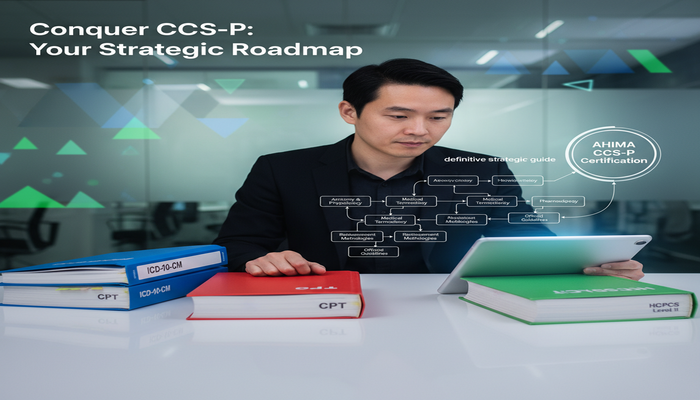
In the dynamic and ever-evolving world of healthcare, precise medical coding is the backbone of accurate reimbursement, data analysis, and regulatory compliance. Among the myriad of certifications available, the AHIMA Certified Coding Specialist–Physician-based (CCS-P) stands out as a highly respected credential, signaling expertise in physician office, clinic, and specialty center coding. This guide is your definitive strategic roadmap to not just preparing for, but conquering the AHIMA CCS-P exam.
Achieving your AHIMA CCS-P certification signifies a mastery of medical coding specific to physician services. It validates your proficiency in assigning accurate diagnosis and procedure codes for services rendered in physician practices, group practices, and various outpatient settings. This certification is a testament to your understanding of intricate coding guidelines, reimbursement methodologies, and compliance regulations essential for today's healthcare landscape.
What is the AHIMA CCS-P Certification?
The AHIMA CCS-P credential recognizes expertise in coding for physician services, reflecting a specialized skill set vital for the financial health and data integrity of outpatient facilities. Unlike hospital inpatient coding, physician-based coding focuses on the services provided by healthcare professionals in ambulatory settings, impacting physician billing, claims submission, and revenue cycle management.
When you earn your AHIMA CCS-P, you are demonstrating a profound understanding of the `ahima certified coding specialist physician-based curriculum`. This includes a deep dive into CPT, HCPCS Level II, and ICD-10-CM coding for a wide array of physician encounters, from office visits and surgical procedures to diagnostic tests and therapies. The certification confirms your ability to navigate complex medical documentation, apply official coding guidelines, and ensure data accuracy.
The Role of a Physician-Based Coder
A certified physician-based coder plays a critical role in the healthcare ecosystem. They are responsible for reviewing clinical documentation, abstracting relevant information, and assigning the correct codes that accurately represent diagnoses, procedures, and services. This process directly impacts claim submission, preventing denials, ensuring appropriate reimbursement, and supporting data for public health and research. Understanding `what is ahima ccs-p certification` means recognizing its direct impact on a healthcare provider's financial viability and compliance posture.
Why Choose CCS-P? Benefits and Career Impact
The `benefits of ahima ccs-p certification` are manifold, impacting both your professional growth and the healthcare industry. For individuals, it enhances career opportunities, often leading to higher earning potential and greater job security. Employers value the CCS-P because it ensures their coding staff can accurately capture services, which minimizes audit risks and maximizes legitimate revenue. This certification is a clear differentiator in the competitive job market, showcasing specialized knowledge and commitment to excellence.
For more details on the certification overview and its value, you can visit the official AHIMA CCS-P certification page.
AHIMA CCS-P Certification Requirements: Laying the Groundwork
Before embarking on your `ahima ccs-p exam prep` journey, it's crucial to understand the eligibility criteria. AHIMA maintains rigorous standards to ensure that its certified professionals possess the necessary foundational knowledge and experience. Meeting these `ahima ccs-p certification requirements` is the first step towards your success.
The primary requirements typically include a combination of education, experience, or holding other relevant certifications. While specific pathways may vary, candidates generally need to demonstrate a strong background in medical coding, anatomy, physiology, and medical terminology. It's advisable to review the most current eligibility requirements directly on the AHIMA website, as they can be updated periodically to reflect industry changes.
One common pathway involves possessing an associate's or bachelor's degree from a CAHIIM-accredited health information management program, or a formal coding education program. Alternatively, candidates may qualify through a combination of relevant coding experience (e.g., two or more years of full-time coding experience directly applying CPT and ICD-10-CM codes) or by holding another AHIMA credential like the CCA or CCS, coupled with some experience.
For more in-depth preparation resources and to explore comprehensive study options, consider visiting the dedicated AHIMA CCS-P preparation page.
Understanding the AHIMA CCS-P Exam Syllabus: Your Blueprint for Study
A thorough understanding of the `ahima ccs-p exam syllabus` is paramount for effective preparation. The exam content outline serves as your blueprint, detailing the domains, subdomains, and tasks that will be covered. This ensures your study efforts are focused and aligned with what the exam will test, providing the knowledge needed to ace the `ahima ccs-p` certification.
The `ahima certified coding specialist physician-based curriculum` is structured around key domains that reflect the diverse responsibilities of a physician-based coder. These domains are designed to assess a candidate's competency across various aspects of medical coding, from foundational medical knowledge to advanced coding applications and compliance.
Key Content Domains of the CCS-P Exam
Medical Record Content and Data Flow: This domain covers the principles of health record documentation, data quality, and the flow of information in healthcare settings. It emphasizes the importance of complete and accurate documentation for coding.
Medical Science Knowledge: A strong understanding of anatomy, physiology, pathology, pharmacology, and medical terminology is essential. This forms the basis for accurately interpreting physician documentation and assigning codes.
Coding Systems and Guidelines: This is the core of the exam, focusing on the application of ICD-10-CM for diagnoses, CPT for procedures and services, and HCPCS Level II for supplies and non-physician services. Candidates must demonstrate mastery of official coding guidelines and conventions.
Compliance and Regulatory Guidelines: Understanding federal regulations, payer-specific guidelines, coding compliance plans, and ethical coding practices is critical. This domain ensures coders operate within legal and ethical boundaries.
Information Technology: Familiarity with electronic health records (EHRs), coding software, and other health information technology is increasingly important in modern coding practice.
Coding for Specific Specialties: The exam will test coding scenarios across various physician specialties, including Evaluation and Management (E/M), surgery, radiology, laboratory, pathology, and medicine sections of CPT. Mastery of these specialized areas is key for success on the `ahima ccs-p` exam.
To obtain the most current and detailed outline of the exam content, refer directly to the AHIMA CCS-P Exam Content Outline document.
Strategic AHIMA CCS-P Exam Prep: Your Roadmap to Success
Passing the `ahima ccs-p` exam requires more than just memorization; it demands a strategic, structured approach. This section outlines a comprehensive `ahima ccs-p exam prep` roadmap, detailing `how to pass ahima ccs-p exam` efficiently and effectively.
Phase 1: Foundation Building
Before diving into intense coding practice, solidify your foundational knowledge.
Mastering Anatomy, Physiology, and Medical Terminology: These are the bedrock of accurate coding. Invest time in reviewing body systems, understanding common diseases, and becoming fluent in medical jargon. Without this, interpreting physician notes will be a constant struggle.
Deep Dive into ICD-10-CM, CPT, HCPCS Level II: Familiarize yourself with the structure, conventions, and specific guidelines of each code set. Purchase the most current official codebooks and spend time flipping through them, understanding their layout and appendices. This foundational work will pay dividends when you tackle complex coding scenarios.
Phase 2: Structured Study Plan and Materials
Once your foundation is solid, structure your study. This is where you leverage the `best ahima ccs-p study materials`.
Choosing Study Materials: Identify reputable study guides and textbooks. Look for resources specifically designed for the `ahima ccs-p` exam. Official AHIMA study guides are often excellent choices. A good `ahima ccs-p study guide` will break down complex topics into manageable sections and provide practice questions.
Consider an `ahima ccs-p online course`: For many, a structured online course provides the discipline and expert guidance needed. These courses often include lectures, interactive exercises, and practice exams, covering the entire `ahima certified coding specialist physician-based curriculum`. They can be particularly helpful for understanding nuanced coding rules and applications.
Create a Study Schedule: Develop a realistic study schedule that allocates time for each content domain. Consistency is key. Break down your study into manageable chunks, focusing on one or two topics at a time before moving on.
Phase 3: Practice and Review
Application of knowledge is where true understanding is forged.
Practice Questions are Crucial: Engage with a wide variety of `ahima ccs-p practice questions`. Look for questions that mimic the exam format, including multiple-choice and medical record scenarios requiring code assignment. The more `ahima ccs-p sample questions` you work through, the better you'll become at identifying key information in documentation and applying the correct codes.
For excellent `ahima ccs-p certification sample questions` to refine your skills, check out the resources available at MedicoExam's sample questions page.
Mock Exams: Take full-length mock exams under timed conditions. This not only tests your knowledge but also helps you manage your time effectively and build endurance for the actual exam. Analyze your results to identify weak areas that require further study.
Identify and Address Weaknesses: After reviewing practice questions and mock exams, pinpoint the areas where you consistently struggle. Dedicate extra study time to these topics. Don't shy away from revisiting foundational concepts if necessary.
Study Groups and Forums: Collaborating with peers can provide new perspectives and clarify difficult concepts. Discussing coding scenarios and guidelines with others can enhance your understanding and retention.
For additional insights and general certification advice, explore this useful certification guidance blog.
Key Strategies for Success on Exam Day
Even with excellent preparation, exam day can be stressful. Implementing smart test-taking strategies can significantly boost your chances of passing the `ahima ccs-p` exam.
Time Management: The CCS-P exam is timed, so efficient time management is crucial. Practice pacing yourself during mock exams. For scenario-based questions, quickly identify the key services rendered, diagnoses, and supporting documentation. Don't dwell too long on one question; make your best educated guess and flag it to return later if time permits.
Read Questions Carefully: Pay close attention to keywords such as “primary diagnosis,” “initial encounter,” or “postoperative complication.” A single word can change the correct code assignment.
Utilize Your Codebooks Wisely: Your official codebooks (ICD-10-CM, CPT, HCPCS Level II) are your most important tools. Become adept at navigating them quickly. Underline or highlight key guidelines and cross-references during your study to save time during the exam. Remember, you cannot bring annotated materials with specific answers or lengthy notes into the exam.
Process of Elimination: When unsure of an answer, eliminate obviously incorrect options first. This increases your chances of selecting the correct response from the remaining choices.
Stay Calm and Focused: Manage pre-exam anxiety with deep breathing techniques. A clear mind performs better. Trust your preparation and approach each question systematically.
AHIMA CCS-P vs. CPC Certification: Which Path is Right for You?
Aspiring medical coders often weigh the `ahima ccs-p vs cpc certification`. Both are highly respected credentials, but they cater to slightly different aspects of medical coding. Understanding their distinctions is key to choosing the path that aligns with your career goals.
Similarities and Differences
Similarities: Both certifications validate expertise in outpatient coding, emphasizing CPT, HCPCS Level II, and ICD-10-CM. They both require a strong understanding of medical terminology, anatomy, and regulatory compliance. Both lead to significant career opportunities in physician office settings.
Differences:
Issuing Body: The CCS-P is issued by AHIMA (American Health Information Management Association), known for its comprehensive approach to health information management. The CPC (Certified Professional Coder) is issued by AAPC (American Academy of Professional Coders), which focuses purely on medical coding and billing.
Exam Focus: While both cover physician services, the `ahima ccs-p` often delves deeper into complex coding guidelines, data quality, and compliance within the broader health information management context. The CPC is highly practical, focusing on coding accuracy for physician services and often includes a greater number of direct coding questions.
Recognition: Both are widely recognized and respected by employers. Some employers may prefer one over the other based on their internal processes or historical affiliations. Both certifications demonstrate a high level of competency in physician-based coding.
Career Path Implications
Choosing between `ahima ccs-p` and CPC largely depends on your desired career trajectory and preferred learning style. If you envision a broader role in health information management, data analysis, or auditing, the CCS-P might be a better fit due to its emphasis on data integrity and compliance. If your primary focus is hands-on, high-volume coding in a physician practice, the CPC is an equally strong and widely accepted credential.
Unlocking Career Opportunities and Earning Potential with CCS-P
Earning your `ahima ccs-p` certification significantly enhances your professional credibility and opens doors to a diverse range of `ahima certified coding specialist physician-based jobs`. Employers actively seek CCS-P certified individuals for their specialized knowledge and proven ability to accurately code physician services, which is critical for revenue integrity.
Job Roles and Industry Demand
With a CCS-P, you are qualified for roles such as:
Physician Office Coder
Coding Specialist (Physician Services)
Outpatient Coder
Coding Auditor
Coding Educator
Consultant for physician practices
The demand for skilled medical coders, especially those with specialized credentials like the CCS-P, remains consistently high. Healthcare providers continuously require experts to navigate the complexities of coding guidelines, maintain compliance, and optimize revenue cycles. This makes the `ahima ccs-p` a highly sought-after credential in the job market.
Salary Expectations for CCS-P Professionals
The `ahima ccs-p salary` can vary based on factors such as geographical location, years of experience, additional certifications, and the type of healthcare facility. However, generally, CCS-P certified coders command competitive salaries due to their specialized skills. Entry-level positions may start at a solid base, while experienced professionals with additional responsibilities (e.g., auditing, management) can earn significantly more. The investment in `ahima ccs-p exam prep` translates directly into increased earning potential and career stability.
Navigating the AHIMA CCS-P Exam Cost and Pass Rate
Before committing to the `ahima ccs-p` journey, it's wise to understand the financial investment and the general outlook on success. Knowing the `ahima ccs-p exam cost` and having a realistic perspective on the `ahima ccs-p pass rate` can help you plan effectively.
AHIMA CCS-P Exam Cost
The examination fee for the AHIMA CCS-P can vary for AHIMA members versus non-members. Typically, AHIMA members receive a discounted rate. It's important to check the official AHIMA website for the most current fee schedule, as these figures are subject to change. Beyond the exam fee, remember to budget for study materials, codebooks, and potentially an `ahima ccs-p online course` if you choose that route.
Understanding the Pass Rate
AHIMA does not publicly release specific, up-to-date pass rates for its certification exams, including the CCS-P. However, it's widely understood that AHIMA certifications are challenging and require thorough preparation. The perceived difficulty reflects the high standards AHIMA maintains for its credentials, ensuring that certified professionals are truly competent.
Instead of focusing on a specific pass rate number, candidates should concentrate on comprehensive `ahima ccs-p exam prep`. A structured study plan, consistent practice, and a deep understanding of the `ahima certified coding specialist physician-based curriculum` are far more indicative of success than any general statistic. The exam is designed to test practical application of knowledge, not just rote memorization.
Maintaining Your Valuable CCS-P Credential
Earning your `ahima ccs-p` is a significant accomplishment, but the journey doesn't end there. To maintain your certification, you must adhere to AHIMA's continuing education unit (CEU) requirements. This ensures that you stay current with the latest coding guidelines, regulatory changes, and industry best practices.
Typically, CCS-P credential holders are required to earn a specific number of CEUs within a designated cycle (e.g., two years). These CEUs can be obtained through various activities, including attending workshops, webinars, online courses, participating in professional associations, or even publishing relevant articles. Proactive engagement in continuing education is crucial for sustaining your expertise and ensuring your `ahima ccs-p` remains valid and valuable throughout your career.
Conclusion
The AHIMA CCS-P certification is more than just a credential; it's a strategic investment in your professional future within the dynamic field of healthcare. By mastering the `ahima ccs-p exam prep`, understanding the detailed `ahima ccs-p exam syllabus`, and diligently practicing with `ahima ccs-p practice questions`, you position yourself for success.
This definitive guide has provided a strategic roadmap, from meeting `ahima ccs-p certification requirements` to navigating the `ahima ccs-p exam cost` and understanding career opportunities. The specialized knowledge gained makes you an invaluable asset in physician-based settings, contributing directly to accurate reimbursement and data integrity.
Embrace this journey with confidence, knowing that your dedication will lead to a rewarding career as an `ahima certified coding specialist physician-based` professional. Your commitment to excellence will unlock new opportunities and ensure you remain at the forefront of medical coding expertise. Continue your professional development journey and find more resources on healthcare certification through this specialized blog for growth.
Frequently Asked Questions (FAQs)
1. What is the primary focus of the AHIMA CCS-P certification?
The AHIMA CCS-P (Certified Coding Specialist-Physician-based) certification primarily focuses on medical coding for services rendered in physician offices, clinics, and other outpatient settings. It validates expertise in applying CPT, HCPCS Level II, and ICD-10-CM codes to physician documentation.
2. What are the main prerequisites for taking the AHIMA CCS-P exam?
While specific requirements can vary, candidates typically need a combination of education (e.g., degree from a CAHIIM-accredited program or formal coding education) and/or relevant coding experience (e.g., two or more years of full-time physician-based coding applying CPT and ICD-10-CM). Holding another AHIMA credential like CCA or CCS can also meet prerequisites.
3. How does the AHIMA CCS-P differ from the AAPC CPC certification?
Both the CCS-P and CPC certify physician-based coding expertise. The CCS-P (AHIMA) often has a broader focus on health information management principles, data quality, and compliance, while the CPC (AAPC) is generally seen as more focused purely on the practical application of coding for physician services. Both are highly respected in the industry.
4. What kind of career opportunities can I expect with an AHIMA CCS-P?
An AHIMA CCS-P opens doors to various roles such as physician office coder, outpatient coding specialist, coding auditor, or coding educator. These professionals are in high demand across physician practices, group practices, specialty clinics, and other ambulatory healthcare settings.
5. Are there specific codebooks I need for the AHIMA CCS-P exam?
Yes, you must have the current year's official versions of the ICD-10-CM, CPT, and HCPCS Level II codebooks. These are permitted for use during the exam, but they must be original, unbound, and cannot contain excessive notes, specific answers, or lengthy handwritten annotations.


Comments
Post a Comment